The Integrator Expansion Plans Innovative Technologies and Future of Surveillance
Leave a reply
The Insight events took place in Glasgow, Leeds, Bristol, London, Birmingham and Dublin, attracting almost 1500 industry professionals to the broad-ranging, hands-on demonstrations of the newest and most cutting-edge security products and concepts.
Hikvision, the world’s leading supplier of innovative video surveillance products and solutions, gave installers and integrators the opportunity to learn more about its Artificial Intelligence-powered Deep Learning solutions, which include human body detection, facial recognition, queue detection and management, and illegal parking detection functionality. Attendees were also able to see new developments in Hikvision’s Access Control range, with card and fingerprint readers, time and attendance and facial recognition terminals, and controllers.
New additions to the established Smart IP – 5 Series cameras; Easy IP and Turbo Analogue HD products were demonstrated, alongside HikCentral video management software, the latest PTZ kit and more.
New products in the analogue Turbo HD 5.0 range include the Hikvision AcuSense Turbo HD DVR, designed using Deep Learning algorithms to enhance object detection, and Hikvision ColorVu Turbo HD cameras, which provide bright colour video images 24/7, even in the lowest-light conditions.
The EasyIP 4.0 range introduces Hikvision AcuSense and ColorVu technology innovations to help businesses maximise their surveillance and security. The integration of Hikvision AcuSense into EasyIP 4.0 cameras and NVRs helps to reduce false alarms, offering faster reaction times to real security threats. EasyIP 4.0 ColorVu cameras use warm, supplemental lighting to deliver bright colour video images, even at night.
Hikvision also introduced its new Thermal Bi-spectrum bullet camera, which is another product to harness Deep Learning algorithms in its powerful behaviour analysis. This enables it to deliver smart alarms like line crossing, region entrance/exit and intrusion, and more, all of which bring enhanced capabilities to perimeter security.
And Hikvision’s new expanded and updated range of Video Intercom systems are designed to make entry communication more personal, pleasant and intuitive than ever before. They offer installers and integrators a wide variety of options in technologies and components, including IP, 2-wire, analogue and standalone wi-fi doorbell versions, enabling them to provide the perfect entry system for their customers’ needs.
Hikvision UK & Ireland marketing director, Justin Hollis, said the Insight events were the perfect opportunity to bring all of the newest products and technology concepts to the door of Hikvision’s partner installers and integrators.
TIANDY Technologies, a leading supplier of versatile surveillance solutions catering to customers from enterprise to entry level is pleased to announce the integration with the next generation leading Artificial Intelligence Video Search Platform provider IronYun.
The partnership with IronYun brings deep learning technology to TIANDY’s industry-leading IP video surveillance solutions. IronYun’s Video Search Platform makes it quick and easy to identify objects of interest from hours of video data. The video search engine can be customized to easily scale and integrate with existing VMS in various applications, creating peerless integration opportunities for system integrators to build enterprise class solutions.
“IronYun’s AI on-premise and VSaaS cloud solutions are the result of over 300 man years of R&D effort, working hand in hand with the world’s top research universities and R&D centers,” said Paul Sun, Chief Executive Officer of IronYun. “We bring speed and adaptability to security while helping customers quickly analyze video data using AI technology. Our video search engine is intuitive and based on easy-to-use natural language interface. The open architecture technology makes it easy to integrate our search engine with hard- and software solutions from world’s leading IP surveillance manufacturers such as Tiandy Technologies.”
“IronYun’s platform utilizes deep learning algorithms to allow customers to search for specific videos using keywords via an intelligent video search engine. Search tasks through terabytes of video that took hours before can now be completed in seconds,” said John van den Elzen, General Manager EMEA, TIANDY Technologies. Van den Elzen continued, “This opens a broad range of interesting integration opportunities with TIANDY’s IP solutions portfolio in large-scale video generating security projects like airports and safe cities. We are always in search for innovative solutions that can strengthen our own offerings and the IronYun video search platform is unique of its kind.”
About IronYun
IronYun, a global company with U.S. offices inStamford, Connecticut provides all-in-one, end-to-end private, public and hybrid cloud computing based video analytics software as a service solutions (VSaaS). For more information, visit www.ironyun.com.
About TIANDY Technologies
TIANDY Technologies is a recognized global leader with 25 years of experience in the surveillance industry. TIANDY is the 3rd ranked video surveillance company from China and the global number 9 in the A&S Security top 50 rankings. TIANDY is dedicated to provide open and easy upgradeable tailor made surveillance solutions with an ongoing commitment to industrial standards like ONVIF. Cutting-edge technology in combination with simple designs for rapid and easy installation will bring down installation times and costs. TIANDY maintains an impressive eco environment of partnerships and is a socially and environmentally friendly company. Green is the color in the TIANDY logo and green is in TIANDY’s corporate veins. TIANDY’s highly experienced sales and engineering teams are strategically located throughout the Americas, ASIAN and EMEA regions to provide unparalleled services and support to its customers around the globe. For more information, contact us direct admin@ertech.co.ukContinue Shopping
Hikvision /P series NVR support Plug& Play function, it can access to IP cameras with POE ports.
Currently Hikvision NVR’s POE ports can access to IP cameras with HIKVISION protocol or
ONVIF protocol.
This operation guide will show you steps to add third-party IP cameras.
Go to NVR’s local interface- Camera, edit IP camera, set the adding mode to Plug& Play.

Check the Internal NIC IPv4 Address of NVR.
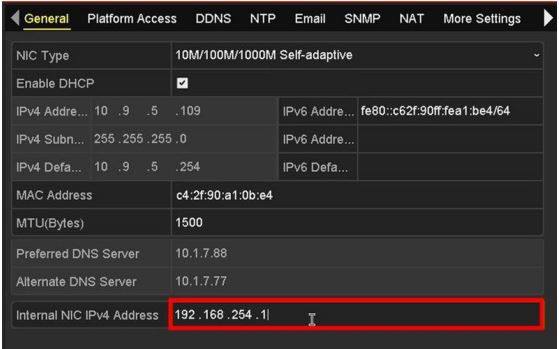
Login in IP camera’s webpage, set the IP address in same network segment with NVR’s Internal
NIC IPv4 Address. Notice that the last number of IP address must be bigger than 100. Such
as 192.168.254.101, 10.9.5.103.
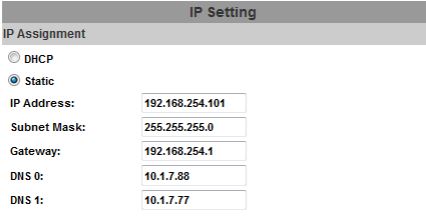
Before connecting IP cameras to NVR’s POE ports, make sure IP camera’s password is 12345
or same with NVR’s admin password. Besides, IP camera should meet AF/AT 802.3a standard
and support ONVIF protocol.
Connect IP camera to NVR’s POE ports, NVR will automatically access to IP camera.

March 22, 2019
User Rating 0 (0 votes)
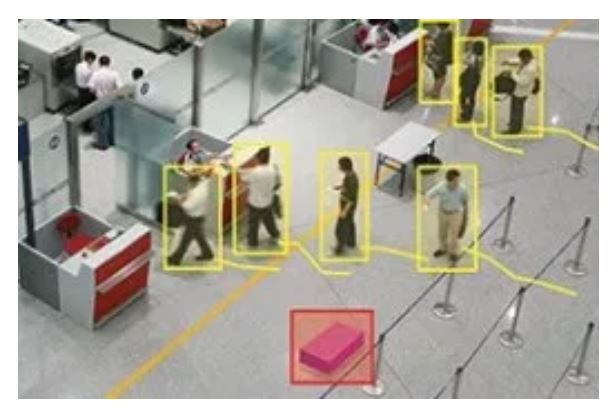
Tiandy Technologies on-board abandoned object detection detects abandoned objects in public areas. This left objects concern authorities since it might pose a security risk. Algorithms can be used to assist security officers monitoring live surveillance video by directing their attention to a potential area of interest and trigger an alarm.
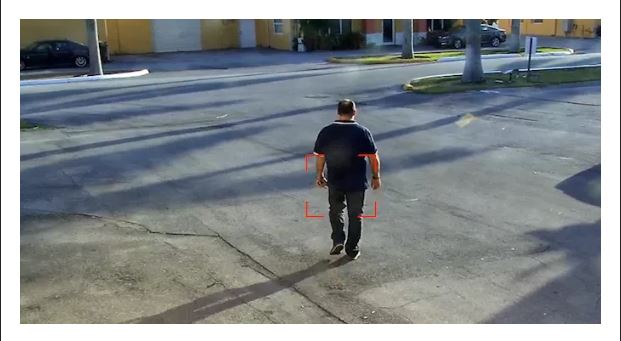
Tiandy Technologies on-board auto tracking enables security officers to zoom in and follow moving people and objects within the field of the camera. The auto tracking function is most effective when monitoring low-traffic areas like parking lots and museums, as well as after-working hours schools and construction sites.
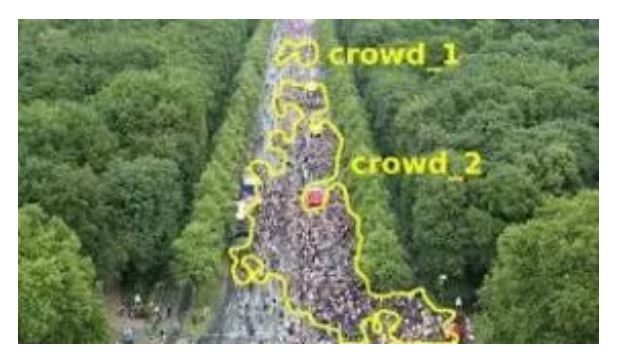
Tiandy Technologies on-board crowd detection detects crowd formations and triggers alarms when a specified number of people or a specified percentage of people is reached in a pre-selected area. Crowd detection improves public safety by detecting the sudden formation of crowds. Crowd detection is ideal for monitoring public spaces, event venues and capacity restricted environments.

Tiandy Technologies on-board face detection helps detecting human faces within digital images. Face detection helps in cutting down false notifications as it ensures that a notification is sent only when there is human presence in a pre-defined area. Tiandy face detection is also able to detect multiple faces in a single scene.

Tiandy Technologies on-board heat map gives insight in customer movement over a period of time and displays temporal density and spatial statistics in different colors. Heat map is ideal for retailers as it gives a better understanding of customer behavior from the moment they enter a retail store, to when they leave. It is a perfect tool to optimize a retail store layout and create the ultimate shopping experience.

Tiandy Technologies on-board loitering detection enables to zoom in and follow people who are remaining in a particular place for a protracted time without an apparent purpose. In many cases loitering takes place before an event has occurred and a perpetrator is not yet a perpetrator, but rather a suspicious target. Loitering analytics can alert operators that someone may look for an opportunity to enter a locked area. With this advanced warning security personnel can take the proper action before a person actually enters the area.
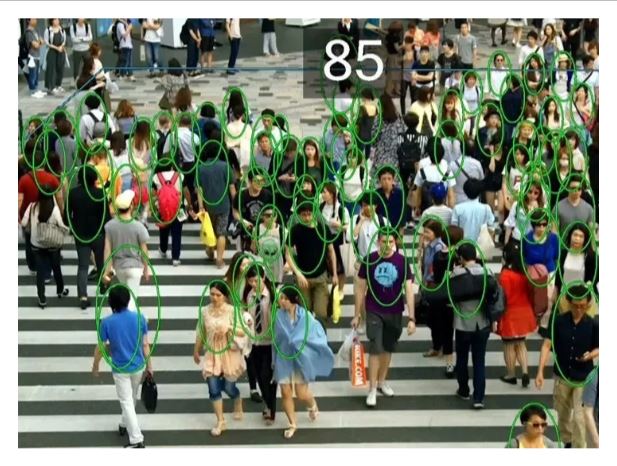
Tiandy Technologies onboard people counting enables operators to count people instantaneously from video images captured by IP cameras at such locations as shopping malls, stadiums, commercial facilities and transport facilities. It keeps a count of the number of heads entering / leaving a given area and gives real-time data of people inside the premises. This can help to manage the people by restricting entry to the premises.
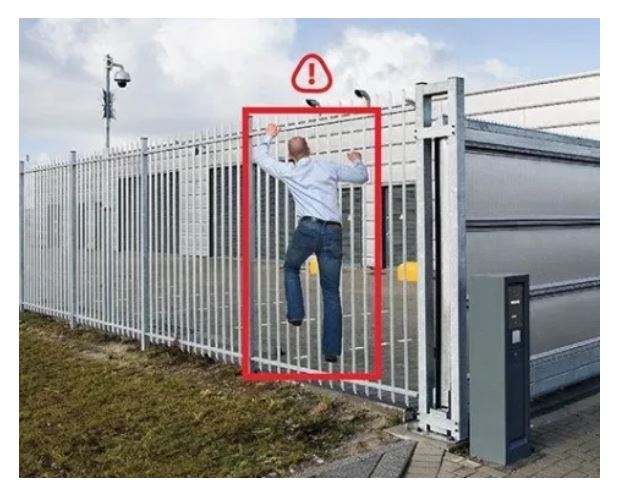
Tiandy Technologies on-board perimeter detection enables operators to search for specific data indicating unusual behavior or objects within the covered area perimeter. Once detected, security officers are alerted for immediate verification and action. Perimeter detection not only identifies security threats, but also continuously monitor and track evolving threats. Perimeter detection is a kind of virtual fence around a property.
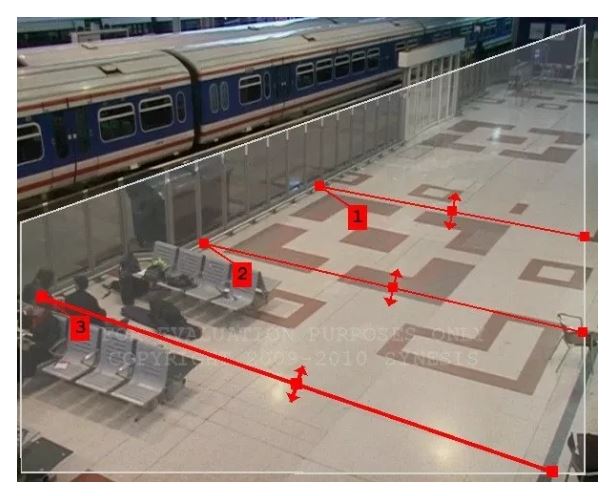
Tiandy Technologies on-board tripwire detection enables operators to easily set up virtual tripwires. Alarms can be enabled in either (or both) directions across the tripwire. Crossing the virtual line triggers an alarm. Real-time identification of an object crossing a virtual threshold gives security personnel to take pro-active action to prevent a possible event. Typical applications include monitoring of traffic flow – like illegal entrance to one way streets or protection of sites with controlled access to critical areas.

Tiandy Technologies on-board video and audio abnormal detection automatically detects any anomalies in focus, internet connection, lens direction or storage related to video. It also detects ambient sound levels and triggers an alarm when a certain noise intensity is exceeded.
Tiandy Technologies is one of the leading IP Video Surveillance manufacturers in the world and the pioneer in Starlight Technology. Tiandy products and solutions are ONVIF certified, RoHS compliant and CE marked. Tiandy is fully compliant with the ISO Standards ISO9001, ISO14001, ISO20000 and ISO27001.Continue Shopping
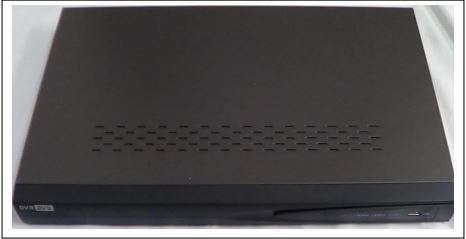
Turn off the NVR or DVR, make sure its unplugged
First you will want to take the top of the NVR off. To do so remove the 3 screws on both sides and 2 on the back of the NVR


With the top off and the Hard Drive in the NVR, connect the Power and Sata (Red) Cables in the appropriate slot.
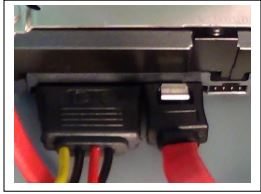
Once you have the Hard Drive connected correctly you need to line it up with the 4 holes on the bottom of the NVR and use the screws provided in the box to tighten the Hard Drive to the NVR.
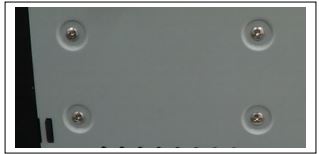
After you have the Hard Drive installed put the cover back on the NVR and screw it back together. With the Hard Drive installed you are ready to initialize (format) it
Tiandy Technologies on-board abandoned object detection detects abandoned objects in public areas. This left objects concern authorities since it might pose a security risk. Algorithms can be used to assist security officers monitoring live surveillance video by directing their attention to a potential area of interest and trigger an alarm.
Tiandy Technologies on-board auto tracking enables security officers to zoom in and follow moving people and objects within the field of the camera. The auto tracking function is most effective when monitoring low-traffic areas like parking lots and museums, as well as after-working hours schools and construction sites.
Tiandy Technologies on-board crowd detection detects crowd formations and triggers alarms when a specified number of people or a specified percentage of people is reached in a pre-selected area. Crowd detection improves public safety by detecting the sudden formation of crowds. Crowd detection is ideal for monitoring public spaces, event venues and capacity restricted environments.
Tiandy Technologies on-board face detection helps detecting human faces within digital images. Face detection helps in cutting down false notifications as it ensures that a notification is sent only when there is human presence in a pre-defined area. Tiandy face detection is also able to detect multiple faces in a single scene.
Tiandy Technologies on-board heat map gives insight in customer movement over a period of time and displays temporal density and spatial statistics in different colors. Heat map is ideal for retailers as it gives a better understanding of customer behavior from the moment they enter a retail store, to when they leave. It is a perfect tool to optimize a retail store layout and create the ultimate shopping experience.
Tiandy Technologies on-board loitering detection enables to zoom in and follow people who are remaining in a particular place for a protracted time without an apparent purpose. In many cases loitering takes place before an event has occurred and a perpetrator is not yet a perpetrator, but rather a suspicious target. Loitering analytics can alert operators that someone may look for an opportunity to enter a locked area. With this advanced warning security personnel can take the proper action before a person actually enters the area.
Tiandy Technologies onboard people counting enables operators to count people instantaneously from video images captured by IP cameras at such locations as shopping malls, stadiums, commercial facilities and transport facilities. It keeps a count of the number of heads entering / leaving a given area and gives real-time data of people inside the premises. This can help to manage the people by restricting entry to the premises.
Tiandy Technologies on-board perimeter detection enables operators to search for specific data indicating unusual behavior or objects within the covered area perimeter. Once detected, security officers are alerted for immediate verification and action. Perimeter detection not only identifies security threats, but also continuously monitor and track evolving threats. Perimeter detection is a kind of virtual fence around a property.
Tiandy Technologies on-board tripwire detection enables operators to easily set up virtual tripwires. Alarms can be enabled in either (or both) directions across the tripwire. Crossing the virtual line triggers an alarm. Real-time identification of an object crossing a virtual threshold gives security personnel to take pro-active action to prevent a possible event. Typical applications include monitoring of traffic flow – like illegal entrance to one way streets or protection of sites with controlled access to critical areas.
Tiandy Technologies on-board video and audio abnormal detection automatically detects any anomalies in focus, internet connection, lens direction or storage related to video. It also detects ambient sound levels and triggers an alarm when a certain noise intensity is exceeded.
Tiandy Technologies is one of the leading IP Video Surveillance manufacturers in the world and the pioneer in Starlight Technology. Tiandy products and solutions are ONVIF certified, RoHS compliant and CE marked. Tiandy is fully compliant with the ISO Standards ISO9001, ISO14001, ISO20000 and ISO27001.Continue Shopping

TIANDY Technologies, a leading supplier of versatile surveillance solutions catering to customers from enterprise to entry level is pleased to announce a new technology collaboration with emerging IP video platform leader Network Optix.
TIANDY’s camera line is compatible Powered-by-Nx solutions globally – including Nx Witness VMS and a suite of local market solutions built with Nx Meta VMP – an open video management platform.
“Having TIANDY work with Nx to ensure their devices are instantly discoverable with advanced management capabilities is great for our channel partners and customers as it adds another affordable, quality option compatible with Nx Witness and other Powered-by-Nx products.” said Tony Luce, Director of Marketing & Business Development for Network Optix.
“We take pride in our extensive partner ecosystem and work tirelessly with these partners to ensure that we can provide our customers with optimal solutions,” said John van den Elzen, General Manager EMEA, TIANDY Technologies. Van den Elzen continued, “New and evolving partnerships with leading technology providers such as Network Optix will enable TIANDY and its customers to benefit from the unique features and capabilities Nx Witness VMS is offering.”
About Network Optix
Founded in 2010 Network Optix is an emerging leader in the IP Video management industry with its open, extensible software solutions Nx Meta VMP and Nx Witness VMS. Nx Meta VMP is an open, extensible Video Management Platform used to build Powered-by-Nx IP video products for target niche or geographic markets. With Nx Meta companies can integrate their hardware or software with every Powered-by-Nx product on the market today, or even create their own intelligent video-powered application. Nx Witness VMS is a Powered-by-Nx Video Management System developed and targeted at the security surveillance and production monitoring industries. Nx Witness VMS also includes a suite of developer tools that allows system integrators to create customer-tailored IP video management solutions capable of integrating any 3rd party device or system. For more information, visitwww.networkoptix.com.
About TIANDY Technologies
TIANDY Technologies is a recognized global leader with 25 years of experience in the surveillance industry. TIANDY is the 3rd ranked video surveillance company from China and the global number 11 of the ASMAG Security top 50 list. TIANDY is dedicated to provide open and easy upgradeable tailor made surveillance solutions with an ongoing commitment to industrial standards like ONVIF. Cutting-edge technology in combination with simple designs for rapid and easy installation will bring down installation times and costs. TIANDY maintains an impressive eco environment of partnerships and is a socially and environmentally friendly company. Green is the color in the TIANDY logo and green is in TIANDY’s corporate veins. TIANDY’s highly experienced sales and engineering teams are strategically located throughout the Americas, ASIAN and EMEA regions to provide unparalleled services and support to its customers around the globe. For more information, visitwww.tiandy.world.
Hikvision, the world’s leading supplier of innovative video surveillance products and solutions, has released updated versions of its thermal deep learning bullet cameras, which will bring enhanced capabilities to perimeter security, including advanced fire detection technology. The new cameras are very cost-effective, with not only deep learning algorithms but also a built-in GPU to support updated algorithms in the future.
Based on deep learning algorithms, Hikvision’s thermal deep learning bullet cameras deliver powerful and accurate behavior analysis, including detections such as line crossing, intrusion, region entrance and exit. The intelligent human/vehicle detection feature helps reduce false alarms caused by animals, camera shake, falling leaves, or other irrelevant objects, significantly improving alarm accuracy.
In addition, Hikvision’s thermal deep learning bullet cameras are equipped with a built-in GPU with advanced imaging processing technology, which can create the best thermal imaging results. These high-performance GPUs can support updates with more complex algorithms with larger data samples in the future to further improve the intelligent effect of Video Content Analytics (VCA).
Hikvision’s thermal deep learning bullet cameras can be used in a broad range of perimeter security and fire prevention solutions, specifically in industry scenarios like power stations, airports, mines and farms. The new single-screw bracket for the cameras is designed with installers in mind, too. Its small size and neat, stable design makes it convenient to install and adjust the angle freely, either by wall, ceiling or stand mounting.
Currently, the model of Hikvision thermal deep learning bullet cameras are available: DS-2TD2137/V1 series. Especially, the thermal infrared detector of this series of cameras is developed and manufactured independently by Hikvision.
Data storage devices across the security industry are routinely required to handle an enormous amount and many layers of raw data. As Safe City projects in varying sizes become more prevalent, the number of surveillance nodes has reached the hundreds of thousands. And due to the widespread use of high-definition monitoring, the amount of data involved in security surveillance has increased dramatically in a short time. Efficient collection, analysis, and application of data and the intelligent use of it are becoming ever more critical in this industry. Thus, improving video intelligence appears to be an inevitable, industry-wide goal.
Security users hope that their investment in new products will bring even more benefits beyond simply tracing and tracking persons of interest and evidence collection after a security event. Some examples of added benefits include using the latest technologies to replace the large amount of man-power previously required for searching surveillance footage, detecting anomalous data, and finding ever more efficient ways to allow surveillance to shift from post-incident tracing to alerts during incidents—or even pre-incident alerts. In order to satisfy these demands, new technologies are required. Intelligent video surveillance has been available for many years. However, the outcomes of its application have not been ideal. The emergence of deep learning has enabled these demands to become reality.
Traditional intelligent video surveillance has especially strict requirements for a scene’s background. The accuracy of intelligent recognition and analysis in comparable scenarios remains inconsistent. This is primarily due to the fact that traditional intelligent video analysis algorithms still have many flaws.
In an intelligent recognition and analysis process, such as human facial recognition, two key steps are required: First, features are extracted, and second, “classification learning” is performed.
The degree of accuracy in this first step directly determines the accuracy of the algorithm. In fact, most of the system’s calculation and testing workload is consumed in this part. The features in traditional intelligent algorithms are designed by humans and have always been heavily subjective. More abstract features—those that humans have difficulty comprehending or describing—are inevitably missed. With shifting angles and lighting, and especially when the sample size is enormous, many features can be too difficult to detect. Therefore, while traditional intelligent algorithms perform well in very specific environments, subtle changes (image quality, environment, etc.) yield significant challenges to accuracy.
The second step—classification learning—mainly involves target detection and attribute recognition. As the number of available categories for classification rises, so does the difficulty level. Hence, traditional intelligent analysis technologies are highly accurate in vehicle analysis but not in human and object analysis. For example, in vehicle detection, a distinction is made between a vehicle and a non-vehicle, so the classification is simple and the level of difficulty is low. To recognize vehicle attributes requires recognition of different vehicle designs, logos, and so on. However, there are relatively few of these, making the classification results generally accurate. On the other hand, if recognition is to be performed on human faces, each person is a classification of its own, and the corresponding categories will be extremely numerous—naturally leading to a very high level of difficulty.
Traditional intelligent algorithms generally use shallow learning models to handle situations with large amounts of data in complex classifications. The analysis results are far from ideal. Furthermore, these results directly restrict the breadth and depth of intelligent applications and further development. Hence the need for increasing the “depth” of intelligence in big data for the security industry is arising.
Traditional intelligent algorithms are designed by humans. Whether or not they are designed well depends greatly on experience and even luck, and this process requires a lot of time. So, is it even possible to get machines to automatically learn some of the features? Yes! This is actually the objective of Artificial Intelligence (AI).
The inspiration for deep learning comes from a human brain’s neural networks. Our brains can be seen as a very complex deep learning model. Brain neural networks are comprised of billions of interconnected neurons; deep learning simulates this structure. These multi-layer networks can collect information and perform corresponding actions. They also possess the ability for object abstraction and recreation.
Deep learning is intrinsically different from other algorithms. The way it solves the insufficiencies of traditional algorithms is encompassed in the following aspects.
First, From “Shallow” to “Deep”
The algorithmic model for deep learning has a much deeper structure than the two 3-layered structures of traditional algorithms. Sometimes, the number of layers can reach over a hundred, enabling it to process large amounts of data in complex classifications. Deep learning is very similar to the human learning process, and has a layer-by-layer feature-abstraction process. Each layer will have different “weighting,” and this weighting reflects on what was learned about the images’ “components.” The higher the layer level, the more specific the components. Simulating the human brain, an original signal in deep learning passes through layers of processing; next, it takes a partial understanding (shallow) to an overall abstraction (deep) where we can perceive the object.
Deep learning does not require manual intervention but relies on a computer to extract features by itself. This way it is able to extract as many features from the target as possible, including abstract features that are difficult or impossible to describe. The more features there are, the more accurate the recognition and classification will be. Some of the most direct benefits that deep learning algorithms can bring include achieving comparable or even better-than-human pattern recognition accuracy, strong anti-interference capabilities, and the ability to classify and recognize thousands of features.
In total, there are three main reasons why deep learning only became popular in recent years and not earlier: the scale of data involved, computing power, and network architecture.
Improvements in data-driven algorithm performance have accelerated deep learning in various intelligent applications in a short amount of time. Specifically, with the increase in data scale, algorithmic performance improved as well. Accordingly, user experience has improved and more users are involved, further facilitating a larger scale of data.
Video surveillance data makes up 60% of big data, and the amount is rising at 20% annually. The speed and scale of this achievement is due to the popularization of high definition video surveillance—HD 1080p is becoming more common, and 4K and higher resolutions are gradually being applied in many important applications.
Hikvision has operated in the security industry for many years with its own research and development capabilities, employing large amounts of real video and image data as training samples. With a large amount of good quality data, and over a hundred team members to label the video images, sample data with millions of categories have been accumulated. With this large amount of quality training data, human, vehicle, and object pattern recognition models will become more and more accurate for video surveillance use.
Furthermore, high performance hardware platforms enable higher computational power. The deep learning model requires a large amount of samples, making a large amount of calculations inevitable. In the past, hardware devices were incapable of processing complex deep learning models with over a hundred layers. In 2011, Google’s DeepMind used 1,000 devices with 16,000 CPUs to simulate a neural network with approximately 1 billion neurons. Today, only a few GPUs are required to achieve the same sort of computational power with even faster iteration. The rapid development of GPUs, supercomputers, cloud computing, and other high performance hardware platforms has allowed deep learning to become possible.
Finally, the network architecture plays its own role in advancing deep learning. Through constant optimization of deep learning algorithms, better target-object recognition can be achieved. For more complex applications such as facial recognition or in scenarios with different lighting, angles, postures, expressions, accessories, resolutions, etc., network architecture will impact the accuracy of recognition, i.e., the more layers in deep learning algorithms, the better the performance.
In 2016, Hikvision achieved the number one position in the Scene Classification category at the ImageNet Large Scale Visual Recognition Challenge 2016. The team from Hikvision Research Institute used inception-style networks and not-so-deep residual networks that perform better in considerably less training time, according to Hikvision’s experiments for training and testing. Furthermore, Hikvision’s Optical Character Recognition (OCR) Technology, based on Deep Learning and led by the company’s Research Institute, also won the first price in the ICDAR 2016 Robust Reading Competition. The Hikvision team substantially surpassed both strong domestic and foreign competitors in three word-recognition challenges, including born-digital images, focused scene text, and incidental scene text, demonstrating that the word recognition technology by Hikvision reached the world’s top level.
In the past two years, deep learning technology has excelled in speech recognition, computer vision, voice translation, and much more. It has even surpassed human capabilities in the areas of facial verification and image classification; hence, it has been highly regarded in the field of video surveillance for the security industry.
In the application of intelligent video in target detection, tracking, and recognition, the rise of deep learning has had a profound influence. When applying those three functions, deep learning potentially touches upon every aspect of the security video surveillance industry: facial detection, vehicle detection, non-motor vehicle detection, facial recognition, vehicle brand recognition, pedestrian detection, human body feature detection, abnormal facial detection, crowd behavior analysis, multiple target tracking, and so on.
These types of intelligent functions require a series of front-end surveillance cameras, back-end servers and other products which support deep learning algorithms. In small scale applications, front-end cameras can directly operate structured human and vehicle feature extraction, and tens of thousands of human facial images can be stored within the front-end devices to implement direct facial comparison, so as to reduce costs of communicating with a server. In large scale applications, front-end cameras can work with back-end servers. Specifically, the structured video task is handled by front-end devices, reducing the workload for back-end devices; matching and searching efficiency of back-end servers improve as well.
This year, Hikvision will soon introduce a series of products with deep learning technology, such as the DeepInview Series cameras which can accurately detect, recognize, and analyze human, vehicle, and object features and behavior, and can be widely used in indoor and outdoor scenarios. Another of products worth mentioning is Hikvision’s DeepInmind Series of NVRs which incorporate advanced deep learning algorithms and imitate human thoughts and memory. The DeepInmind products feature an innovative NVR+GPU mode, retaining the advantages of traditional NVRs and additional structured video analysis functions, which together greatly improve the value of video.
Deep learning is the next level of AI development. It is beyond machine learning where supervised classification of features and patterns are set into algorithms. Deep learning incorporates unsupervised or “self-learning” principles. Hikvision is developing this concept in its own analytics algorithms. Enhanced accuracy is the result of multi-layer learning and extensive data collection. Application of this algorithm into face recognition, vehicle recognition, human recognition, and other platforms will significantly advance the performance of analytics.